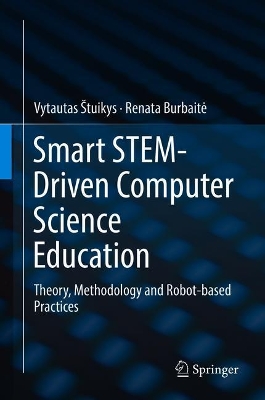

At the centre of the methodology used in this book is STEM learning variability space that includes STEM pedagogical variability, learners’ social variability, technological variability, CS content variability and interaction variability. To design smart components, firstly, the STEM learning variability space is defined for each component separately, and then model-driven approaches are applied. The theoretical basis includes feature-based modelling and model transformations at the top specification level and heterogeneous meta-programming techniques at the implementation level.Practice includes multiple case studies oriented for solving the task prototypes, taken from the real world, by educational robots. These case studies illustrate the process of gaining interdisciplinary knowledge pieces identified as S-knowledge, T-knowledge, E-knowledge, M-knowledge or integrated STEM knowledge and evaluate smart components from the pedagogical and technological perspectives based ondata gathered from one real teaching setting. Smart STEM-Driven Computer Science Education: Theory, Methodology and Robot-based Practices outlines the overall capabilities of the proposed approach and also points out the drawbacks from the viewpoint of different actors, i.e. researchers, designers, teachers and learners.
 Kids will love this hilarious fairy tale adventure packed with clever twists, familiar characters and page-turning fun.
 The second book in a fabulous new magical, middle-grade series filled with adventure, wonder and wildness,
No one has written a review for 'Smart STEM-Driven Computer Science Education: Theory, Methodology and Robot-based Practices'
Why not be the first to share your opinion?